
Specs are compiled from manufacturer listings and verified buyer reviews and can change over time — please confirm the key details on the product page before buying.
Every step feels like a new problem when neuropathy numbs your feet. The wrong boot — too tight, too stiff, too narrow — can turn a short walk into a miserable chore. The right boot works with your feet instead of fighting them. It gives your toes room to spread, cushions every impact, and slips on without you bending and struggling. This guide cuts through the noise to find the boots that actually deliver that relief, built on real owner experiences, not just marketing claims.
I’m Emma — the founder and writer behind Snuggy Mom. This guide is built by comparing the manufacturers’ published specifications and the patterns across verified customer reviews, so you get each pick’s real strengths and trade-offs instead of marketing spin.
If you have been living with the sting of nerve pain or the clumsy feeling of numb feet, you already know that standard footwear makes things worse. We honed in on the features that matter most — extra depth, a smooth interior, a wide toe box, and quality arch support — to find the boots for neuropathy that genuinely make a difference for people who deal with this condition day in and day out.
Our Picks at a Glance

How To Choose The Best Boots for Neuropathy
Neuropathy does not give you a lot of margin for error. A boot that rubs in the wrong spot, pinches across the top, or offers no shock absorption can make your feet ache for hours after you take them off. The right pair does the exact opposite — it wraps your feet in a protective shell that lets you move without thinking about your feet. Here is what to look for.
Wide Toe Box and Extra Depth
Squeezing numb toes into a narrow toe box is a recipe for pain. You need a boot that gives your toes room to spread naturally, which improves circulation and reduces pressure points. Extra depth is equally important. It allows the boot to accommodate high-volume feet and custom orthotic inserts without squishing the top of your foot. Look for terms like “X-wide,” “4E,” or “extra depth” in the product description — these are the first hard sign that a boot was actually designed with neuropathy in mind.
smooth Interior
With neuropathy, you may not feel a small fold or rough stitch rubbing against your skin, which means a blister can form before you know it. A smooth interior — sometimes called a “stitch-free” or “smooth” lining — removes that hidden danger entirely. It uses smooth fabric seams (the way the pieces of a shoe are joined) that are flat and glued rather than stitched and raised, so there is nothing to chafe against sensitive skin. This is a non-negotiable safety feature for anyone with reduced sensation in their feet.
Cushioning and Arch Support
Every step you take sends a shock through your feet. For neuropathy, that shock can radiate as sharp pain, especially in the heels and balls of the feet. Look for boots that use a multi-layer cushioning system — often a combination of a shock-absorbing sole and a padded removable insole. A good arch support (the upward curve of the shoe that cradles the middle of your foot) distributes your weight evenly and takes pressure off the sensitive nerve endings. Many top picks for neuropathy include adjustable insoles, so you can fine-tune the level of support for your specific foot.
Quick Comparison
| Model | Best For | Closure Type | Toe Box Width | Waterproof | Amazon |
|---|---|---|---|---|---|
| FitVille EasyTop Wings★ Best Overall | Daily slip-on comfort | Velcro Adjustable | X-Wide / Extra Wide | No | Amazon |
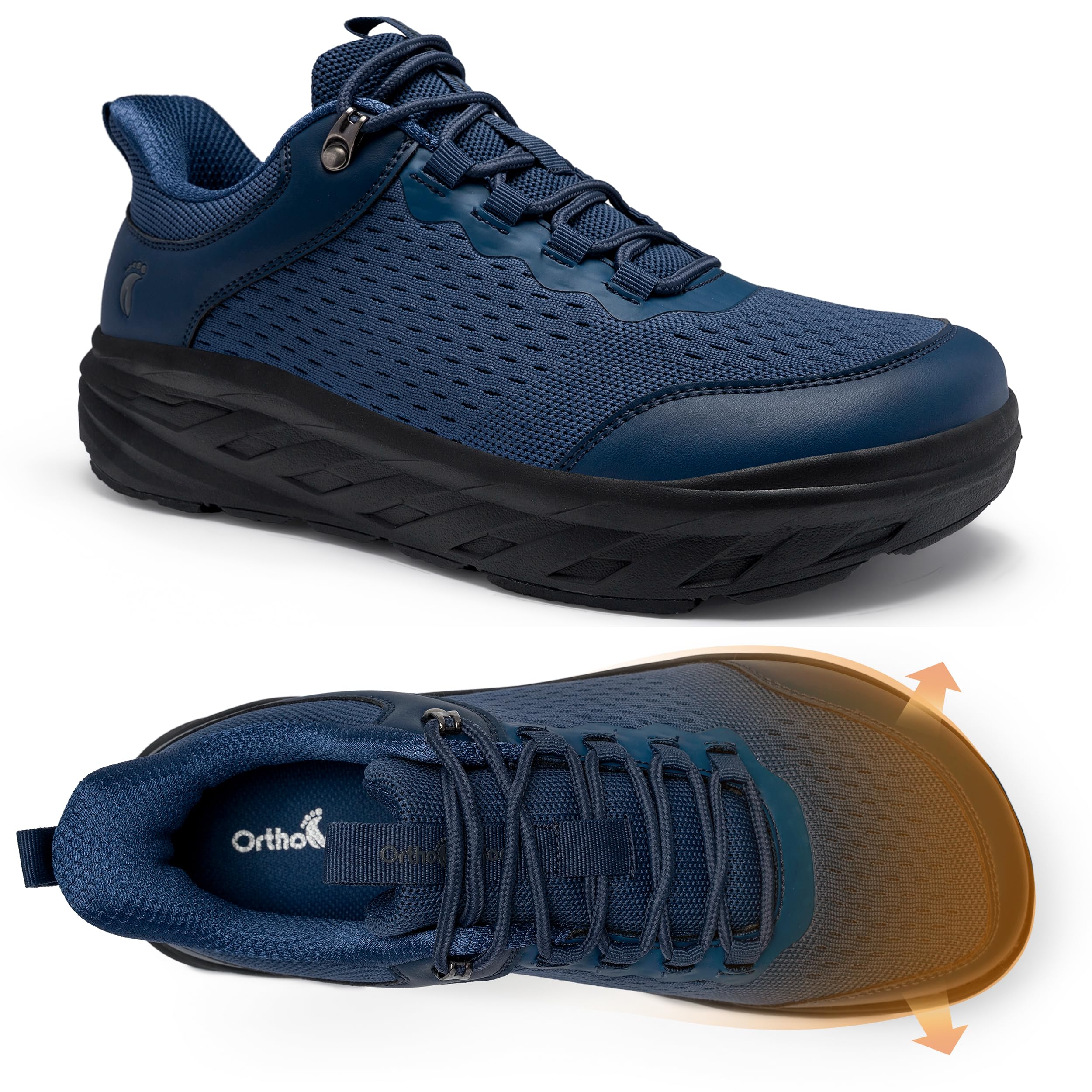
| OrthoComfoot Wide Walking ShoesPremium Relief | Immediate all-day relief | Traditional Lace-Up | Extra Wide | No | Amazon |
| Orthofeet Hunter Hiking Boot | Lightweight outdoor use | Traditional Lace-Up | Wide / Roomy | Somewhat | Amazon |
| Orthopedic Winter Boot | Warm winter wear | Side Zipper & Lace | Wide / Extra Wide | Yes | Amazon |
| OrthoComfoot Hiking Boots | Rugged trail hiking | Traditional Lace-Up | 4E Wide | Yes | Amazon |
| Dr. Comfort Ruk Boot | Therapeutic leather style | Traditional Lace-Up | Extra Wide | No | Amazon |
| Dr. Comfort Boss Boot | Work and everyday wear | Traditional Lace-Up | Extra Wide | No | Amazon |
In‑Depth Reviews
1. FitVille Diabetic Shoes for Men Extra Wide Slip-on Shoes EasyTop Wings
Our pick — 4.5★ from 5,000+ verified ratings; the strongest balance of quality and price.
Thousands of owners vouch for this as the most trusted boot for daily neuropathy relief.
You avoid bending over and pulling a heel into place because the EasyTop Wings design with Velcro straps opens the shoe almost to the toes. Just open it, slide your foot in, and secure the strap. The extra wide toe box provides what the brand calls “maximum level of comfort” for wide or swollen feet, and owners confirm it delivers: buyers report that “diabetic with neuropathy very pleased” is a common sentiment. The smooth interior prevents friction from stitches that could lead to irritation, which is critical when you cannot feel a blister forming. The sole uses a high-rebound EVA material (a lightweight, flexible foam that absorbs shock and springs back quickly) that provides stable support and shock reduction. Owners also note that the shoes look like regular sneakers, so you do not have to wear a “medical-looking” shoe. The Velcro itself gets high marks, with buyers praising how grippy it is and how tightly it holds. The trade-off is the insole: it uses a thick standard foam, not memory foam, so some owners wish for a plusher footbed. But given that several owners mention it costs about a third of similar orthopedic websites, this is a minor point in an otherwise stellar package.
Owner Obsession
- Velcro opens almost to the toes, making it the easiest boot to get on and off
- Extra wide toe box and smooth interior prevent hot spots and irritation
- Slip-resistant sole with good shock reduction for daily walking on gravel or pavement
- Priced well below typical specialty orthopedic footwear
The Fine Print
- Insole is a firm standard foam, not a plush memory foam — some owners swap for a thicker insert
- Sizing can run short or inconsistent for some, so allow for a potential size exchange
- Not waterproof, so avoid deep puddles or slush
Your best bet if: you want the most-trusted, most-reviewed boot that a huge community of neuropathy sufferers has already vetted as comfortable and practical for daily life.
Think twice if: you need a waterproof boot for wet winter weather — this is a breathable sneaker-style shoe, not a winter boot.
2. OrthoComfoot Men’s Orthopedic Diabetic Wide Walking Shoes
At a 4.7/5 rating with fewer reviews than the top pick, this shoe lets you dial in the fit yourself.
what separates it immediately is the adjustable insole kit it ships with — a set of pads, a heel cup, and different thickness inserts that let you dial in the exact level of arch support and cushioning your foot needs. Owners describe the fit as “roomy but secure,” and the wide toe box is the standout feature that repeatedly gets called out. “My feet have never felt so better in these shoes,” one buyer sums up. The shoe is designed for plantar fasciitis, flat feet, and neuropathy specifically, with a lightweight airy mesh upper that lets the foot breathe. Owners note it significantly reduces foot pain from neuropathy. The thick, rockered sole (a sole curved at the heel and toe to help your foot roll forward naturally while walking) provides stable cushioning. The catch is that durability has question marks: several owners mention the EVA sole shows wear relatively quickly, with a functional lifespan around 6 months of regular use. And if you have high arches, the built-in support may be too low, requiring you to swap the insole for your own orthotic. Compared to the FitVille EasyTop Wings, it offers more customizability at the cost of a shorter sole life.
What Wins People Over
- Adjustable insole kit (pads, heel cup, different thicknesses) for a custom, pressure-free fit
- Wide toe box reduces leg fatigue and eliminates pinching across the toes
- Lightweight, breathable mesh upper keeps feet cool during all-day wear
- “Immediate comfort” from the start with no break-in period
The Honest Trade-off
- EVA sole shows wear quickly — customers note noticeably worn tread around the 6-month mark
- Low built-in arch support; high arches will likely need a swap to a custom insert
- Runs slightly large, so you may need to size down a half step
Reach for this if: you want the best-rated shoe for immediate pain relief and the ability to fine-tune the fit with the included adjustment kit.
Pass it up if: long-term durability is your top concern, or if you have high arches and do not plan to swap the insoles.
3. Orthofeet Men’s Orthopedic Hunter Lightweight Lug Sole Hiking Boot

This hiking boot gives neuropathic feet a lightweight option for dry trails.
Until recently, hitting the trail with neuropathy meant choosing between a boot that pinched your toes and a boot that offered no support. The Orthofeet Hunter tries to solve both. It uses the brand’s Ortho-Cushion System — a multi-layer shock-absorbing sole combined with an ergonomic insole — to soften every step on uneven ground. The wide, roomy toe box allows your toes to spread naturally, which is essential for maintaining circulation on a long hike. Owners confirm that the boots make feet feel better and allow for pain-free walking, even on rough terrain. The catch is durability. While the boots are comfortable and lightweight, several reviewers point out durability issues, specifically that the laces fail after a few months. “Good shoe, but laces failed after 5 months” is a specific complaint that appears in the reviews. The boot is also not very water-resistant; water can soak through the upper and pour in through the laces if you step in a deep puddle. And the fit is divisive: some owners say they run a full size too large and are very wide in the toe box, while others found them comfortable with thick winter socks. Compared to the OrthoComfoot hiking boots below, this one is lighter but much less durable.
Why It Stands Out
- Lightweight construction with a thick lug sole for good traction on dry trails
- Advanced Ortho-Cushion System absorbs shock and reduces impact on sensitive feet
- Wide, roomy toe box lets your toes spread naturally for better circulation
- Decent arch support and cushioning for all-day comfort on flat walks
Where It Falls Short
- Durability is a known issue — laces have failed on multiple pairs within months
- Water resistance is minimal; the boot soaks through easily in wet conditions
- Fit runs large and wide; you may need to size down a full step
Grab these if: you need a lightweight, cushioned boot for casual walks on dry, uneven trails and you prioritize toe room over water protection.
Pass if: you hike in wet weather, need a boot that will last multiple hiking seasons, or want a snug, true-to-size fit.
4. Men’s Orthopedic Diabetic Winter Boots Wide Toe Box Leather Dress Oxfords
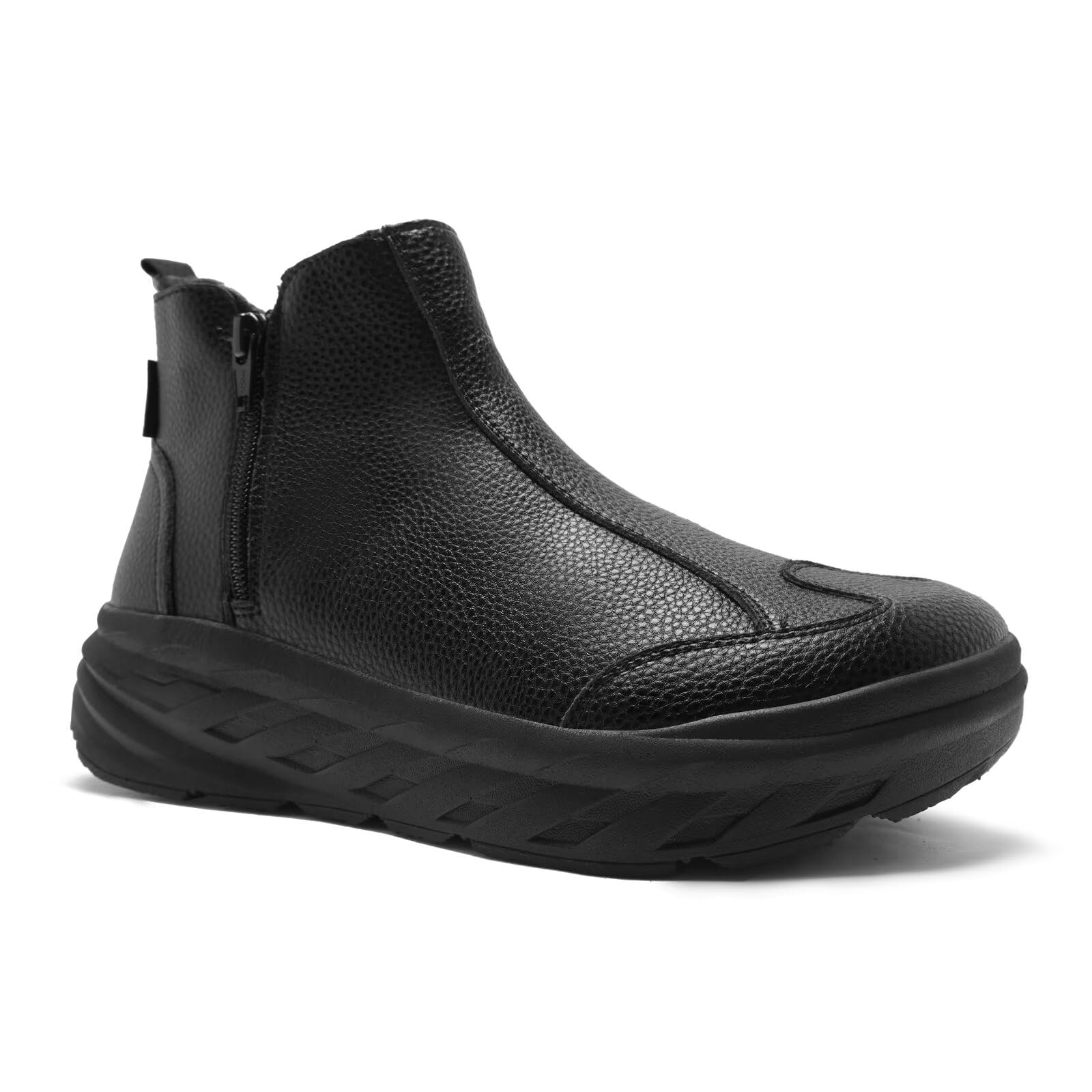
Waterproof leather and a fleece lining fight winter cold without fighting your feet.
If you need a boot for snow, slush, and freezing temperatures, this is the pick. It features a waterproof leather upper with a fleece lining that keeps feet warm even at freezing temperatures. Shoppers say the boots are “truly waterproof” and protect feet in snow and rain. The boot comes with two different thicknesses of cushion inserts, so you can adjust the fit for a high-instep foot or for wearing thick winter socks. The side zippers make it much easier to get the boot on and off than a traditional lace-up — a big win for anyone with limited hand mobility. The wide toe box is genuinely foot-shaped, with a high, roomy front that gives your toes plenty of vertical space. Owners with injured or problem feet call it “great for wide fit needs.” The boot also eliminates ankle and lower back pain for some owners, thanks to the supportive insole and the stable sole. The primary trade-off is the zipper hardware: some owners note the zippers are a bit finicky, with small pulls that can be hard to grip for elderly users. The cushioning has also been reported to weaken slightly after a few wears, though most owners find it stays comfortable for the season. One owner sums it up: “I found the right boots for my feet, no more pain.”
What Excites Owners
- Waterproof leather construction with fleece lining keeps feet warm and dry in winter conditions
- Comes with two different cushion inserts for a customized fit with thick socks
- Side zippers make on/off easy compared to a standard all-lace boot
- Wide, foot-shaped toe box with high vertical space for swollen toes
What to Watch For
- Zipper pulls are small and can be finicky for users with arthritis or limited hand strength
- Cushioning softens over time — not a boot for years of heavy daily wear
- Fit runs small; plan to order a half to full size larger than normal
Best suited for: anyone who needs a warm, waterproof winter boot and values easy entry via side zippers and a spacious toe box for thick socks.
Not for you if: you live in a mild climate with no snow, or you need a boot that can take years of rugged daily use without the zipper or cushioning giving out.
5. OrthoComfoot Men’s Orthopedic Wide Waterproof Hiking Boots
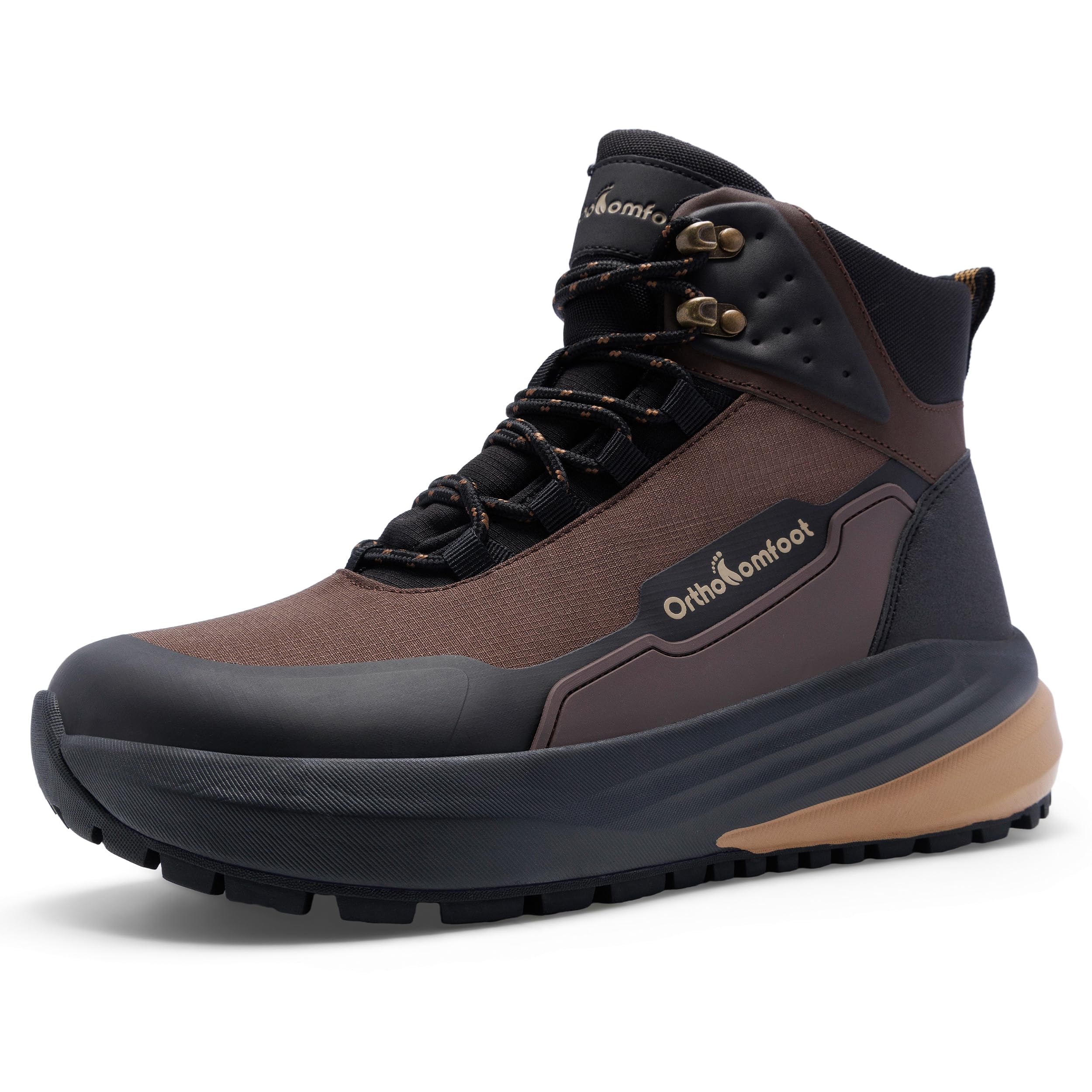
True 4E width and full waterproofing make this the go-to for real trail work with massive feet.
If you have been told your feet are “just too wide” for normal hiking boots, this is the boot that proves them wrong. It offers a true 4E wide fit, meaning it is built from the ground up for feet that need extra horizontal space, not just a “wide” label slapped on a standard last. Owners with massively wide feet — size 11 at the widest width possible — say these boots fit perfectly, with a spacious toe box that lets toes wiggle freely. The boot is also fully waterproof, using a membrane that keeps feet dry through puddles and wet grass. The outsole is slip-resistant and provides excellent traction on wet rocks, mud, and snow. Arch support is the other standout feature. The deep heel cradle and excellent arch support provide noticeable relief for plantar fasciitis, and the boot comes with adjustable spacer insoles (included pads that fill extra volume for people with narrow or low-volume feet) so you can dial in a locked-in fit. The cushioning is plush but supportive, and the mid-ankle collar stabilizes sprained ankles. The downsides are minor but real: some buyers report glue peeling around the logo and cheap-feeling laces on early batches. The boot is also slightly bulky and stiff, requiring a short break-in period. But for the combination of a true wide fit, waterproofing, and serious arch support, the owner consensus is that “they feel like walking on a cloud” once broken in. The OrthoComfoot hiking boots are more rugged and waterproof than the Orthofeet Hunter.
The Big Wins
- True 4E wide fit with a massive, spacious toe box for the widest feet
- Excellent built-in arch support that actively relieves plantar fasciitis and foot fatigue
- Waterproof membrane keeps feet dry on wet trails and through rain
- Slip-resistant outsole provides good traction on mud, wet rocks, and light snow
Small Gripes
- Minor build quality concerns — some units have peeling logo glue and cheap feeling laces
- Stiff from the start; plan for a short break-in period of a few walks
- Slightly bulky profile, so not the best for casual street wear
Go with this if: you have very wide feet (true 4E) and need a waterproof hiking boot with genuine therapeutic-level arch support for outdoor adventures.
skip it if: you want a boot for casual daily wear around town — the bulk and break-in period are better suited to actual trail use.
6. Dr. Comfort Ruk Men’s Therapeutic Diabetic Extra Boot Leather Lace-up
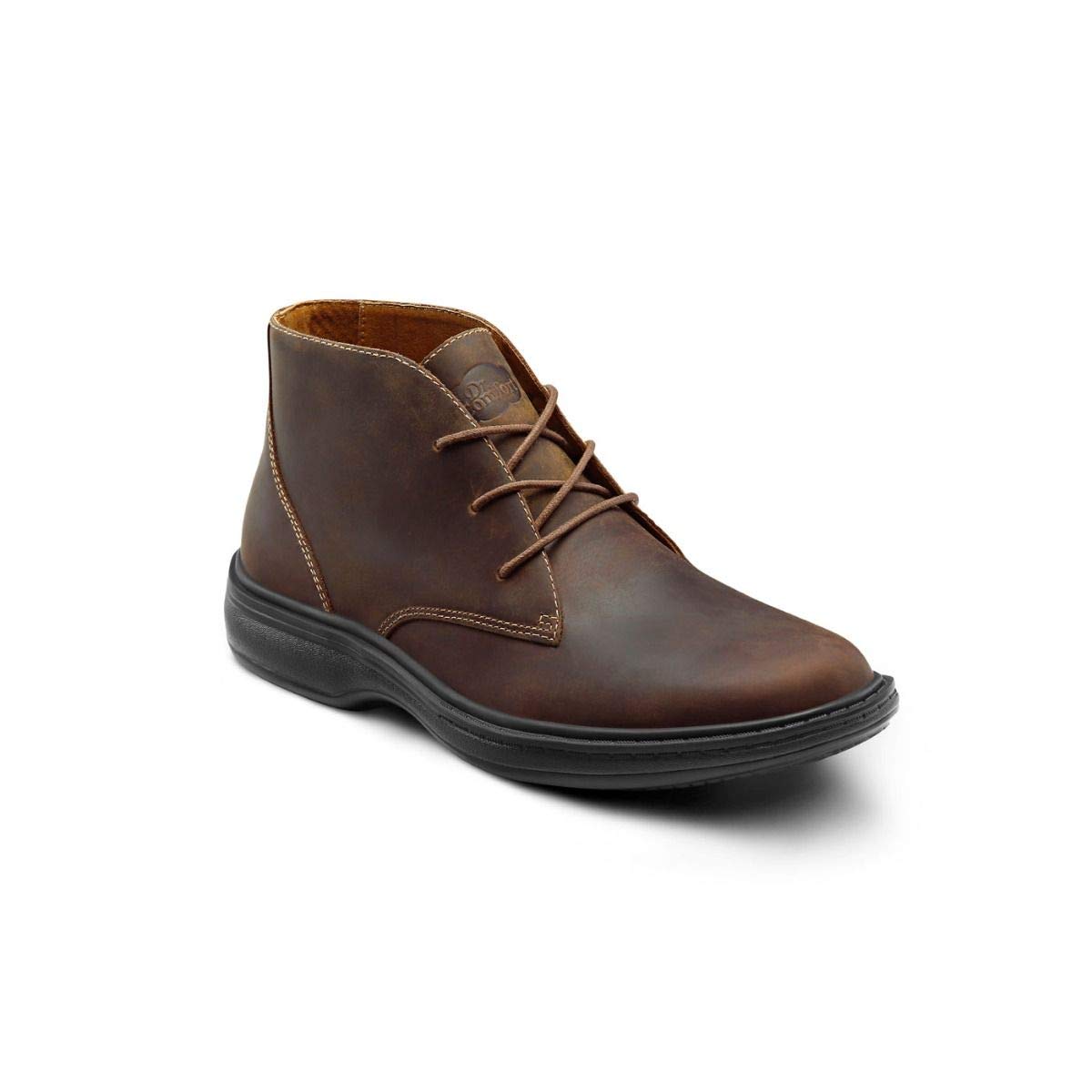
Genuine leather that passes for a normal dress boot while treating your feet right.
Most therapeutic boots look like orthopedic clunkers. The Dr. Comfort Ruk is a notable exception. It is a genuine leather lace-up boot with clean lines that pass for a normal, masculine dress boot. Owners specifically note that it is “not dorky-looking diabetic footwear.” The boot is designed from the ground up for therapeutic use, featuring a roomy toe box, cushioned support, and extra depth to accommodate custom orthotics (custom-made shoe inserts prescribed by a doctor). The interior is smooth and free of pressure points, which reduces the risk of irritation for numb feet. Support is a key strength here, particularly for weak ankles. The boot provides a stable, high-top feel that owners with ankle instability appreciate. The cushioning is described as wonderful, with the insole being removable to fit your own orthotic. The catch is sizing: the Ruk is notorious for running large. Some owners who normally wear a size 10.5 found that a size 9.5 fit properly. There are also occasional quality-control gripes, with some units arriving looking like they had been returned before. And the insole system can be finicky — the orthopedic insert feels great but can push the foot up, making the top of the boot feel tight. If you get the sizing right, though, this is a rare case of a medical boot that does not look like one. It is a dressier alternative to the Dr. Comfort Boss below.
Style & Substance
- Genuine leather upper looks like a normal, stylish dress boot — not a medical shoe
- Excellent ankle support for weak or unstable ankles
- Extra depth accommodates custom orthotics and swollen feet
- Smooth, smooth interior reduces risk of irritation for numb skin
The Challenges
- Sizing is very inconsistent — runs large enough that most owners size down a full step
- Some units arrive looking used (wrinkled leather, no original box, missing inserts)
- Orthopedic insole can make the top of the boot feel tight against the instep
Ideal for: anyone who needs a professional-looking leather boot for work or dress that still provides therapeutic comfort and strong ankle support.
Not recommended if: you want a consistent, predictable fit without the hassle of multiple size exchanges.
7. Dr. Comfort Men’s Boss Diabetic Boots

A proven work boot on the market since 2014 that keeps diabetic feet comfortable on a budget.
Dr. Comfort’s Boss boot has been on the market since 2014, and a dedicated base of repeat buyers keeps coming back. It is designed for casual work and everyday wear, offering a classic comfort fit that is wider and deeper than standard boots. The extra depth and roomy toe box are built specifically to accommodate diabetic feet and custom orthotics. Owners describe the fit as perfect and the boots as very comfortable, with stronger ankle support than many competitor boots in its range. For a 92-year-old diabetic father who needed a replacement pair, the Boss delivered the same comfort as a pair that lasted a full decade. The boot offers enhanced support level and a traditional lace-up closure. The primary praise from owners is the value: the boots cost significantly less than similar offerings from drug stores or specialty footwear shops. The downsides are real, though well-known among the user base. The top eyelet hook (the small metal loop that holds the uppermost part of the lace) is prone to snapping, which can ruin the shape of the boot for some. A few owners also report the outer material can be stiff enough to rub blisters, even through thick socks — a serious concern for neuropathy. Most owner experience is positive, with the “soft, comfortable and supportive” verdict being the most common, but these failures mean it is not a universal fit. If you want the simpler sizing and leather look of the Ruk instead of this work-boot style, pay attention to the size discrepancy.
The Upside
- Proven design with a long history of satisfied diabetic and neuropathy users
- Enhanced support level with good ankle stabilization for daily walking
- Extra depth for custom orthotics — owners confirm their inserts fit easily
- Lower price point than specialty orthopedic stores for similar quality
The Downside
- Top eyelet hooks can snap under tension, ruining the lacing system
- Stiff outer material can rub blisters on sensitive skin — not a smooth interior design
- Some owners find the fit too stiff for immediate comfort; a break-in period is needed
Pick this if: you want a proven, budget-friendly work boot with enhanced support and you already own custom orthotics that fit into extra-depth footwear.
Avoid if: you have very sensitive skin or need a smooth interior — the stiff leather can rub blisters during the break-in period.
Understanding the Specs
Extra Depth vs. Standard Depth
Standard boots have a fixed volume inside the shoe that fits an average foot. Extra depth boots add roughly 1/4 to 1/2 inch of vertical space inside the shoe. That extra room allows the boot to sit higher over the top of your foot (the instep), which is crucial for neuropathy. It gives you space to insert a custom orthotic or a thick diabetic sock without the top of the boot pressing down and restricting circulation. If a product description says “extra depth” or “deep toe box,” it is designed for feet that need that extra vertical clearance, not just a wider wrap-around.
Rockered Sole
A rockered sole is curved at the heel and toe in a slight upward arc, like the bottom of a rocking chair. This curve helps your foot roll forward from heel to toe with less effort, reducing the bending motion at the ball of the foot. For neuropathy, this is valuable because it reduces the pressure and shock that travels through the forefoot with every step, which is often where nerve pain concentrates. Boots with a rockered sole feel like they have a gentle forward-rolling motion built into the stride, rather than a flat, clomping gait that sends impact straight up your leg.