
Specs are compiled from manufacturer listings and verified buyer reviews and can change over time — please confirm the key details on the product page before buying.
When a baby is diagnosed with hip dysplasia — or you simply want to prevent it — the right carrier changes everything. You need a design that supports the frog-leg “M” position, where the thighs are spread and the knees sit higher than the bottom, so the hip joints develop naturally. The wrong carrier, one that lets the legs dangle straight down, can stress the sockets. This guide focuses on five carriers that meet that core requirement, helping you pick the one that fits your baby, your body, and your daily routine.
I’m Emma — the founder and writer behind Snuggy Mom. This guide is built by comparing the manufacturers’ published specifications and the patterns across verified customer reviews, so you get each pick’s real strengths and trade-offs instead of marketing spin.
Whether you are carrying a newborn or a toddler, these five contenders have been recognized as hip-healthy by the International Hip Dysplasia Institute or built to the same ergonomic standards. This review of the best baby carrier for hip dysplasia breaks down weight limits, breathability, ease of use, and real-world comfort for both you and your baby.
Our Picks at a Glance
How To Choose The Best Baby Carrier for Hip Dysplasia
Hip dysplasia means the ball of the thigh bone sits loosely in the hip socket. The right carrier keeps the legs in a flexed, spread position — knees higher than the bum — which gently seats the ball deep into the socket. Here is what to check when you shop.
Look for the “M” Shape in the Seat
When you put your baby in the carrier, their legs should form a clear M — knees apart and slightly raised. The carrier’s seat panel must be wide enough to support from knee pit to knee pit. A narrow seat forces the legs to hang, which is the exact position you want to avoid.
Quick Comparison
| Model | Best For | Weight Capacity | Carry Positions | Key Material | Amazon |
|---|---|---|---|---|---|
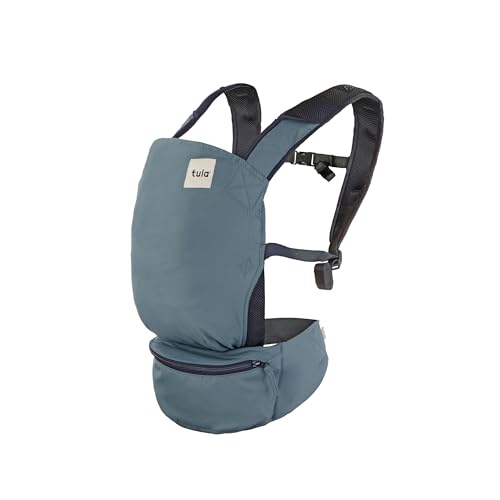
| Baby Tula Lite★ Best Overall | Travel & hot weather | 12-30 lbs | Front, Back | Ripstop fabric | Amazon |
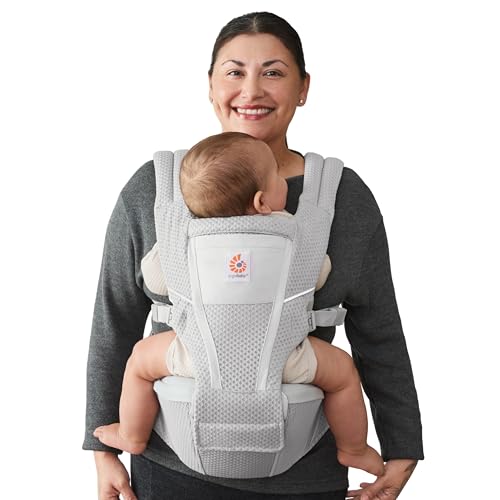
| Ergobaby AltaAlso Great | Long-wear & versatility | 12-45 lbs | Front, Face-out, Back, Hip | Cushioned hip seat | Amazon |
| Boppy ComfyFit | Newborn to toddler value | 8-35 lbs | Front, Face-out | Polyester/Spandex | Amazon |
| WildBird Aerial | Premium comfort & style | 7-45 lbs | Front, Back | Linen | Amazon |
| BabyBjörn Harmony | Maximum adjustability | 7-40 lbs | Four positions | 3D Mesh | Amazon |
In‑Depth Reviews
1. Baby Tula Lite Compact Baby Carrier
Our pick — over 4.5★ from 700+ verified ratings; the strongest balance of quality and price.
The featherweight carrier that folds into its own waistband for instant storage.
The Baby Tula Lite weighs far less than most buckle carriers, and it packs down into a compact waist pouch that doubles as a mini cross-body bag. It is made from durable, quick-drying ripstop fabric — the same material used in outdoor gear — so it stays breathable on warm days and dries fast if it gets wet. Owners call it “lightweight, breathable, ideal for hot weather” and note that it stays cool even when baby is pressed up against you.
This carrier supports the M-position, and the International Hip Dysplasia Institute recognizes it as hip healthy. But it starts at 12 lbs, so it is not for newborns. It fits babies with good head and neck control up to 30 lbs. The shoulder straps are lightly padded mesh, and the waistband adjusts for sizes XS through 4X, which makes it a good option if you and a partner share carrying duties. The downsides? Some owners find the back buckle tricky to reach, and the fixed seat width does not fit every body equally.
It includes a detachable UPF 50+ hood for sun coverage, and the built-in storage pouch can hold a phone, diaper, or wipes. If you live in a hot climate or travel often, this carrier is your best bet.
Grab this for: daily walks in warm weather, travel, and parents who want a carrier that disappears into a diaper bag.
Look elsewhere if: your baby is under 12 lbs or you need a carrier that starts at the newborn stage.
2. Ergobaby Alta Hip Seat Baby Carrier
The indoor-outdoor all-rounder that grows with your baby from four months to preschool.
The Ergobaby Alta is a two-in-one design — a wide cushioned hip seat that converts into a full 3-position carrier. The hip seat alone supports a deep M-position, so you get the frog-leg shape you need for healthy hips from the start. The entire system carries 12 to 45 lbs, compared to the Boppy ComfyFit’s 8-35 lb range, meaning this carrier can handle a toddler who wants to walk one minute and be carried the next.
What wins people over is comfort. Buyers report that the hip seat “reduces back and arm pressure on long outings,” and one buyer called it “the best of 4 carriers for a 10-month-old.” The padded waistband and H-back straps spread the weight across your hips and shoulders nicely. The catch is the waist fits best on those with a larger frame; some slimmer parents find the band feels bulky on smaller waists.
Why it wins
- Hip seat takes pressure off your back during long carries
- Versatile with inward, outward, back, and hip-only modes
- Large pocket for phone and snacks
Consider this first
- The waist band can feel oversized on a petite frame
- At its top weight, it is heavier than the travel-focused Tula Lite
Reach for it if: you need one carrier to last from the fourth trimester into the toddler years and you value cushioned lumbar support.
Think twice if: you have a smaller waist size and dislike a wide, padded belt.
3. Boppy ComfyFit Adjustable Baby Carrier

A stretchy wrap feel with structured buckles — and no infant insert needed.
The Boppy ComfyFit hybrid design hits a balance between a soft cloth wrap and a structured carrier. The 88% polyester / 12% spandex fabric stretches to hold your baby securely while the padded waist belt and shoulder straps distribute weight evenly. It starts at 8 lbs, so it fits a newborn right away, and the JPMA certification (a third-party safety testing seal) means it has passed safety checks. One buyer summed up the experience: “I went to my cousin’s graduation, which was about 2 1/2 hours long and it held my 20 pound nine month old and he was comfortable in it.”
The fabric feels soft like a wrap but the buckles make it far faster to put on. The carrier offers a newborn front face-in (frog position), baby front face-in (legs out), and front face-out. Owners praise the material quality and stretchiness, though some find the fit tight for both mother and baby — the wrap-like nature means you have to pull it snug, and that can compress a very small infant if you are not careful.
The carrier packs into its own pouch, making it easy to toss in a diaper bag, but it lacks a hip seat, so you will feel the baby’s weight more directly on your shoulders compared to the Ergobaby Alta or the WildBird Aerial.
Best suited for: budget-savvy parents who want a soft, stretchy carrier that adapts from newborn to toddler without extra purchases.
A fair warning: the stretchy fabric requires a snug fit each time, so it is slower to get on than a fully structured buckle carrier.
4. WildBird Aerial Buckle Carrier
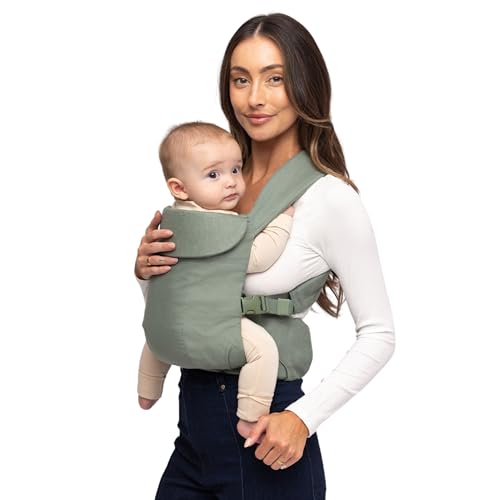
Linen construction and built-in lumbar support for all-day wear without back strain.
The WildBird Aerial is made from breathable linen, which softens over time without losing its structure. It has padded cross straps that sit away from the neck and a one-of-a-kind lumbar support pad that lifts the baby’s weight off your lower back. The carrier support 7 to 45 lbs, so it works from the early weeks right into the toddler years.
Owners consistently say it is the most comfortable carrier they have tried. The feedback includes “excellent weight distribution, no back or shoulder strain” and one buyer admitted “unfortunately it is worth the price.” The M-position seat is deep and ergonomic. The catch is the carrier does not support forward-facing carry — only inward-facing front and back carries. It also lacks a sun hood or storage pockets, so you have to carry those separately. And the linen, though beautiful, can run a bit warm in mid-summer compared to the Baby Tula Lite’s mesh fabric.
Choose the Standard (XS-XL) for a waist 24 to 41 inches, or the Large (L-4XL) for 35 to 53.5 inches. The adjustability is excellent for sharing between caregivers.
Final thought: The WildBird Aerial is for the parent who values back support and style over forward-facing versatility and storage.
Best for: anyone with back concerns who wants a premium, natural-fiber carrier that feels like a second skin after a few wears.
skip it if: you need forward-facing carry or want a carrier with an integrated sun hood and pockets.
5. BabyBjörn Baby Carrier Harmony, 3D Mesh
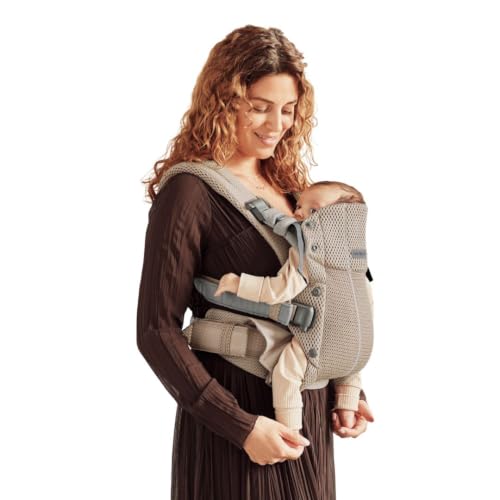
Four carrying positions and a 3D mesh that keeps both of you cool in every season.
The BabyBjörn Harmony is among the most adjustable carriers on the market. It supports babies from 7 to 40 lbs and fits wearers from XS to XXL. The 3D mesh fabric is highly breathable — owners consistently point out that it prevents overheating for both parent and baby. It also offers four carrying positions: newborn inward, baby inward facing, outward facing, and back carry. The carrier is acknowledged as hip healthy by the IHDI (International Hip Dysplasia Institute), so the M-position (knees higher than bottom, legs spread) is built into the seat design.
The straps click into place easily, and the waist strap distributes weight across the hips rather than the shoulders. Owners across hundreds of reviews call it “very comfortable, easy to put on and off by yourself” and note that “it takes the weight off the shoulders.” The downsides are its price — it is the most expensive carrier here — and some owners feel the seat is narrower than the WildBird or Ergobaby Alta, which means it may not achieve as deep an M on a very chunky baby.
The carrier is machine washable, which is a lifesaver for daily use. If you have the budget and want maximum adjustability for multiple caregivers, the Harmony is tough to top.
Final advice: This is the carrier to pick if breathability and ease of getting it on solo are your top priorities. It is less suited for very heavy toddlers near the 40-lb limit, where the wider seat of the Ergobaby Alta feels more supportive.
Choose it for: daily use with a newborn through toddler, especially if you live in a warm climate and need quick on-off access.
Consider alternatives if: your baby is on the larger side and you need the widest possible seat for the deepest M-position.
Understanding the Specs
M-Position / Frog-Leg Position
This is the single most important feature for healthy hips. The baby’s thighs should be spread apart with the knees sitting higher than the bottom — like a frog. The carrier seat must be wide enough to support from one knee pit to the other, and the fabric should be firm (not stretchy in the seat panel) so the legs stay in that position.
Weight Range & Age Range
A carrier that starts at 7 or 8 lbs works for newborns without an extra insert. A top range of 30-45 lbs determines how long you can use it as your child grows. The widest range (7-45 lbs) covers from the first weeks into the toddler years, but the seat width stays fixed, so a very small infant may not get a perfect M-position on a wide seat — you need to check the carrier’s specific newborn suitability.
FAQ
What is the M-position in a baby carrier?
Can a baby carrier cause hip dysplasia?
How do I know if my baby’s legs are in the right position in the carrier?
At what weight does a baby outgrow a hip-dysplasia-friendly carrier?
Is a structured carrier better than a soft wrap for hip dysplasia?
Can I use a baby carrier for a newborn with hip dysplasia?
How do I wash a hip-dysplasia-friendly baby carrier?
Is the BabyBjörn really hip-healthy despite past controversy?
What is the difference between inward-facing and outward-facing for hip dysplasia?
Final Thoughts: The Verdict
For most families, the baby carrier for hip dysplasia winner is the Ergobaby Alta because it combines a supportive hip seat, three full carry modes, and a weight range that carries a baby from the fourth month into the toddler years — all while keeping hips in the correct M-position. If you want a lightweight, travel-friendly carrier that packs into its own belt, grab the Baby Tula Lite. And for a premium linen option with built-in lumbar support and a 7-45 lb range, the WildBird Aerial is the one to reach for.
How We Picked
We do not accept paid placement. Every pick is matched to a real buyer and a real use-case; we do not hands-on test units.
Sources & Methodology
Specifications: manufacturer listings and product documentation. Review insights: verified customer reviews, as of July 2026. Pricing: not shown on this page (it changes often); check the current price via the retailer link.
As an Amazon Associate, Snuggy Mom earns from qualifying purchases. This does not affect which products we feature.